
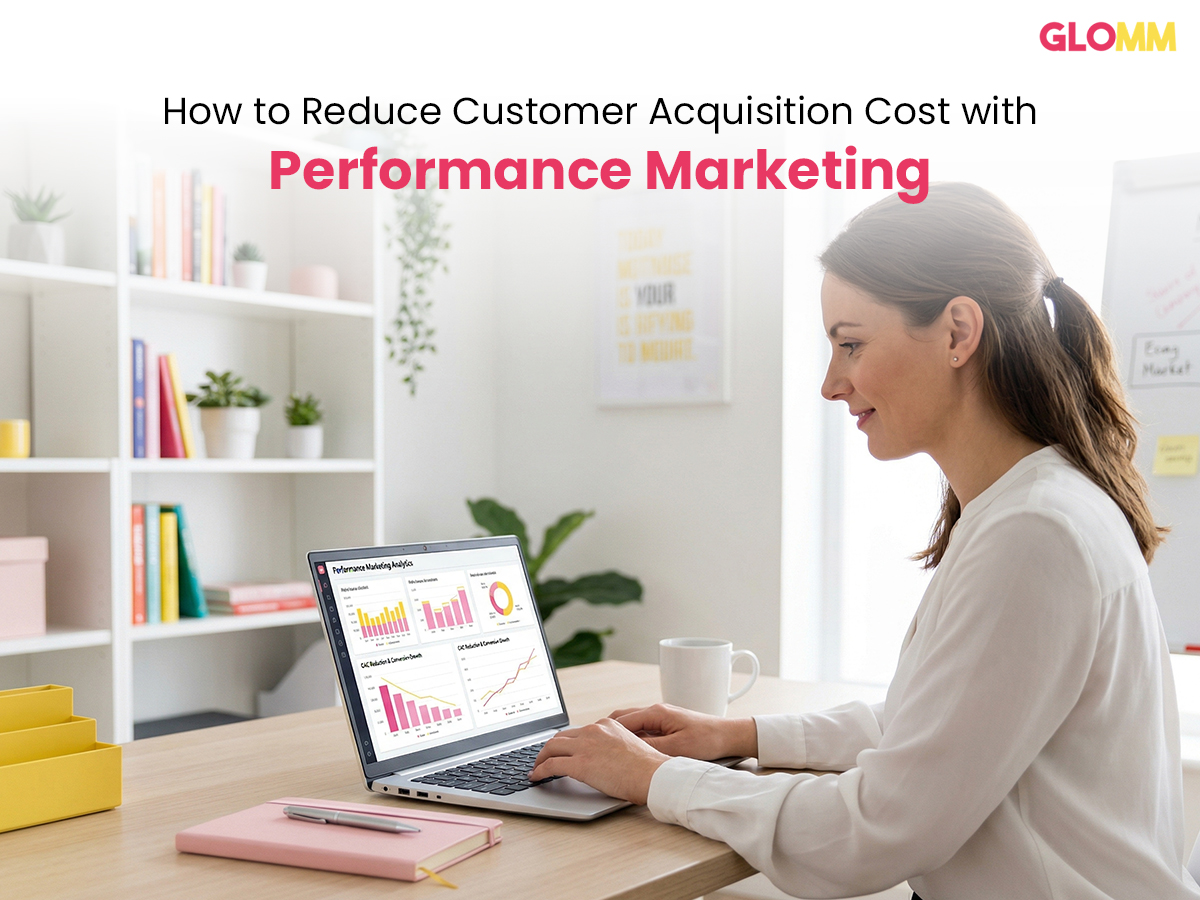
To reduce customer acquisition cost (CAC) with performance marketing, focus on high-intent targeting, conversion rate optimization (CRO), data-driven ad strategies, and full-funnel campaigns. By improving landing pages, leveraging retargeting, and optimizing Google Ads and Meta Ads, businesses can increase conversions while lowering acquisition costs and maximizing ROI.
Table of Contents
ToggleHow to Reduce Customer Acquisition Cost with Performance Marketing
In 2026, scaling a business isn’t about increasing ad budgets—it’s about maximizing efficiency.
That’s why brands are focused on one critical metric:👉 Customer Acquisition Cost (CAC)
Lower CAC means:
- Higher profitability
- Better return on ad spend (ROAS)
- Sustainable growth
And the most effective way to achieve this? Performance marketing strategies driven by data and optimization
Key Takeaways
- High-intent targeting reduces wasted ad spend
- Conversion rate optimization (CRO) significantly lowers CAC
- Landing page improvements increase conversions without more traffic
- Retargeting boosts ROI from existing users
- Full-funnel strategies outperform single-channel campaigns
What is Customer Acquisition Cost (CAC)?
Customer Acquisition Cost (CAC) is the total cost of acquiring a new customer.
📊 It Includes:
- Ad spend (Google Ads, Meta Ads, etc.)
- Creative production costs
- Tools and marketing resources
🧮 Formula:
CAC = Total Marketing Spend ÷ Customers Acquired
👉 The goal is simple: Get more customers for the same (or lower) cost
1. Target High-Intent Audiences
Not all traffic converts—and low-quality traffic increases CAC.
✔ Optimize Targeting By:
- Using intent-driven keywords (search ads)
- Segmenting audiences based on behavior
- Excluding irrelevant users
👉 Platforms like Google Ads help capture users actively searching for your product or service.
📈 Result:
- Higher conversion rates
- Lower cost per acquisition
2. Optimize Ad Creatives Continuously
Your ad creatives directly impact performance.
✔ High-Performing Brands:
- A/B test ad copy and visuals
- Refresh creatives regularly
- Focus on strong value propositions
👉 On Meta Ads (Facebook & Instagram), better creatives reduce CPC and increase engagement.
📉 Result:
- Lower cost per click (CPC)
- Higher conversion rates
3. Improve Landing Page Conversion Rates (CRO)
Driving traffic is only half the job—conversion happens on your landing page.
✔ Key CRO Improvements:
- Faster load speed
- Clear messaging and CTA
- Trust signals (reviews, testimonials)
👉 Even a small improvement can significantly reduce CAC. This is exactly why conversion rate optimization matters more than traffic for long-term growth.
📊 Result:
- More conversions without increasing ad spend
4. Leverage Retargeting for Cost Efficiency
Most users don’t convert on the first visit.
✔ Retargeting Helps:
- Re-engage visitors
- Address objections
- Improve brand recall
👉 Retargeted users are far more likely to convert at a lower cost.
📈 Result:
- Higher ROI
- Lower CAC
5. Use a Full-Funnel Performance Marketing Strategy
Focusing only on conversions increases costs.
A Smart Funnel Includes:
- Top Funnel: Awareness (social media ads)
- Mid Funnel: Consideration (retargeting, content)
- Bottom Funnel: Conversion (search ads)
👉 This approach aligns with performance marketing in Dubai—from clicks to conversions, where brands optimize every stage of the journey.
📊 Result:
- Balanced ad spend
- Improved efficiency
- Lower CAC
6. Optimize Based on Data, Not Assumptions
Performance marketing is measurable—use that advantage.
✔ Track:
- Cost per click (CPC)
- Conversion rate (CVR)
- Return on ad spend (ROAS)
✔ Optimize:
- Pause underperforming ads
- Scale high-performing campaigns
- Refine targeting
👉 Choosing the right platform is also critical. Understanding Google Ads vs Meta Ads ROI
helps allocate budget effectively.
📉 Result:
- Smarter decisions
- Lower acquisition costs
7. Increase Customer Lifetime Value (LTV)
Reducing CAC isn’t just about spending less—it’s about increasing value.
✔ Improve LTV Through:
- Upselling and cross-selling
- Retention campaigns
- Email marketing
👉 Higher LTV makes your CAC more sustainable.
📈 Result:
- Better profitability
- Higher ROI
CAC Optimization Framework
| Strategy | Impact on CAC | ROI Potential |
|---|---|---|
| High-Intent Targeting | High | High |
| Creative Optimization | High | High |
| Landing Page (CRO) | Very High | Very High |
| Retargeting | High | High |
| Full-Funnel Strategy | Very High | Very High |
Advanced Strategy: Combine SEO + Paid Ads
The smartest brands don’t rely only on paid ads.
They combine:
- SEO (organic traffic)
- Paid ads (performance marketing)
👉 This reduces dependency on paid acquisition and lowers overall CAC.
Why Performance Marketing Services Matter
Reducing CAC consistently requires:
- Continuous testing
- Data analysis
- Funnel optimization
- Creative strategy
👉 Professional performance marketing services help brands:
- Reduce CAC
- Increase conversions
- Scale profitably
Conclusion
Reducing Customer Acquisition Cost isn’t about cutting budgets—👉 it’s about improving efficiency at every stage of your funnel.
The brands that win in 2026 will:
- Target smarter
- Optimize continuously
- Use data to drive decisions
Because in performance marketing:👉 it’s not who spends more—it’s who spends smarter 🚀
🚀 Ready to Lower Your CAC?
If you want to scale profitably with performance marketing services, now is the time.
Work with experts who focus on:
- Conversion rate optimization (CRO)
- Paid ads strategy (Google Ads & Meta Ads)
- Full-funnel growth
👉 Because lower CAC = higher profit + faster business growth.
A good CAC depends on your industry, but it should always be lower than your customer lifetime value (LTV).
Focus on high-intent targeting, improve landing pages, and use retargeting campaigns to increase conversions.
CAC determines how efficiently you acquire customers and directly impacts profitability.
Yes, improving conversion rates allows you to generate more customers without increasing ad spend.
Both Google Ads and Meta Ads can reduce CAC when used strategically based on funnel stage and audience intent.
Yes, SEO drives organic traffic, reducing reliance on paid ads and lowering overall acquisition costs