
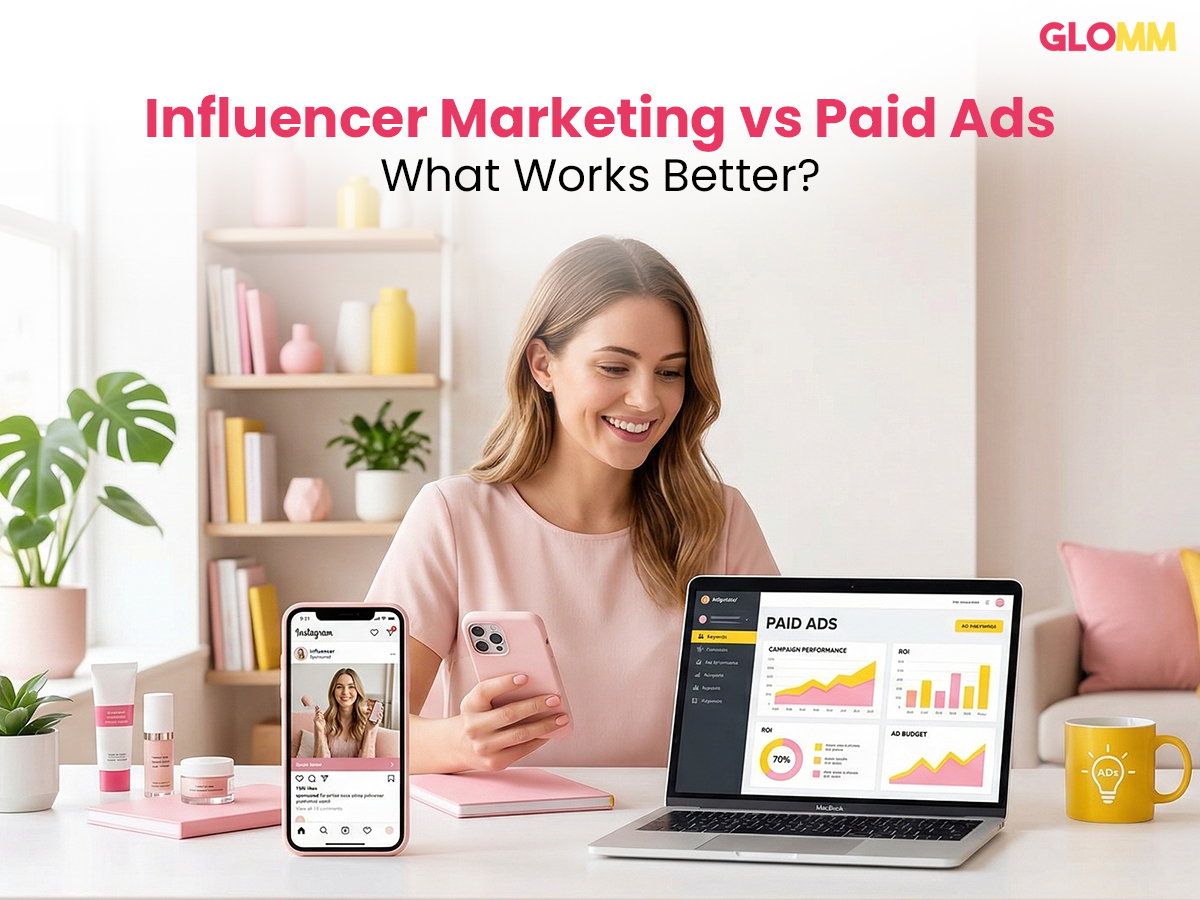

In today’s digital landscape, brands are constantly choosing between two powerful growth channels: influencer marketing and paid ads.
Both deliver results—but in very different ways. The real question is not just what works better, but what works better for your business goals.
Table of Contents
ToggleUnderstanding the Core Difference
At a fundamental level, the difference comes down to trust vs targeting.
- Influencer marketing leverages credibility, social proof, and audience trust
- Paid ads rely on data, precision targeting, and scalability
Platforms like Meta Ads and Google Ads allow brands to reach highly specific audiences instantly, while influencers build deeper emotional connections with their followers through authentic content and storytelling.
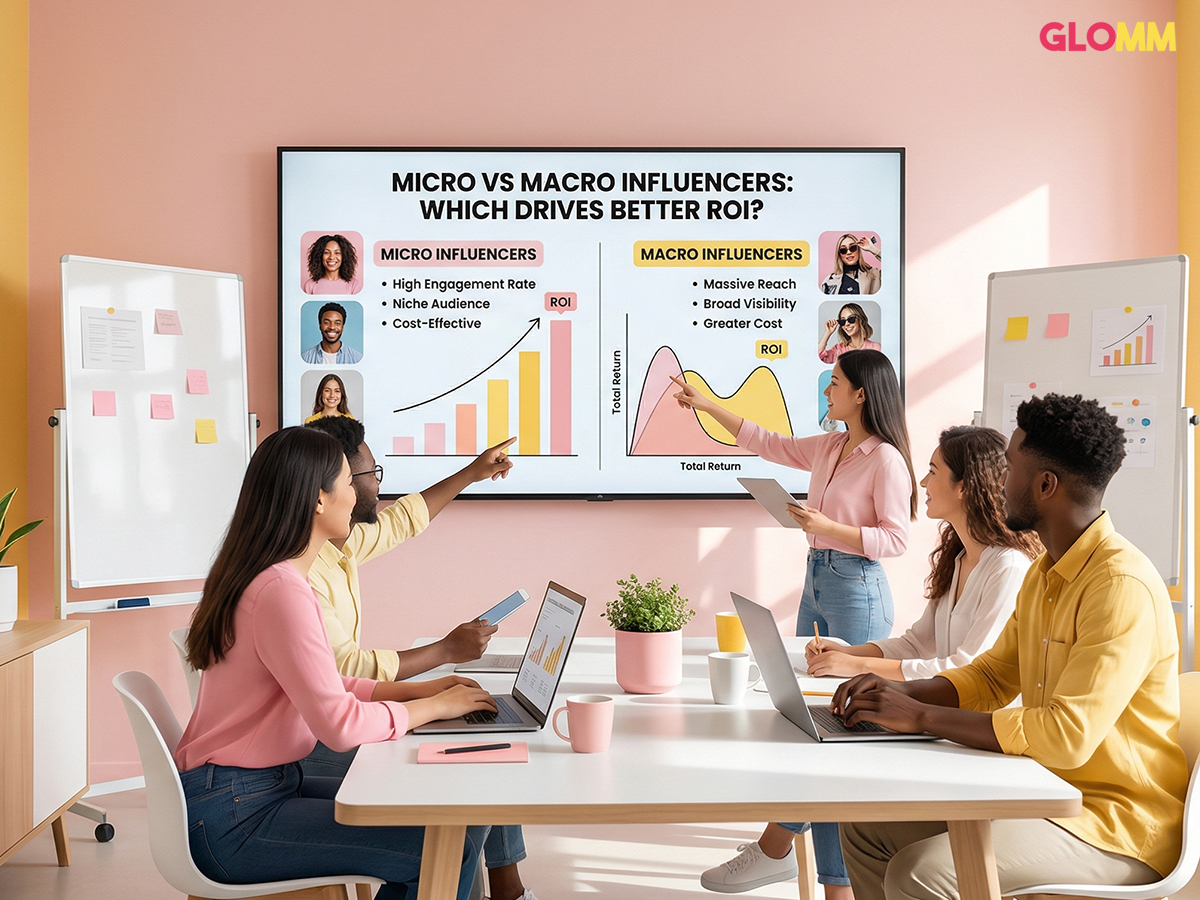
👉 This is why choosing the right type of influencer matters—whether micro or macro can significantly impact ROI:
ROI Comparison: What the Data Shows
Both channels are effective—but in different ways.
- Influencer marketing delivers an average ROI of $5–$6+ for every $1 spent
- Paid ads offer predictable, scalable returns with measurable metrics like ROAS (Return on Ad Spend) and CAC (Customer Acquisition Cost)
However:
- Influencer campaigns often drive higher engagement rates and brand recall
- Paid ads excel in consistent lead generation, conversions, and funnel optimization
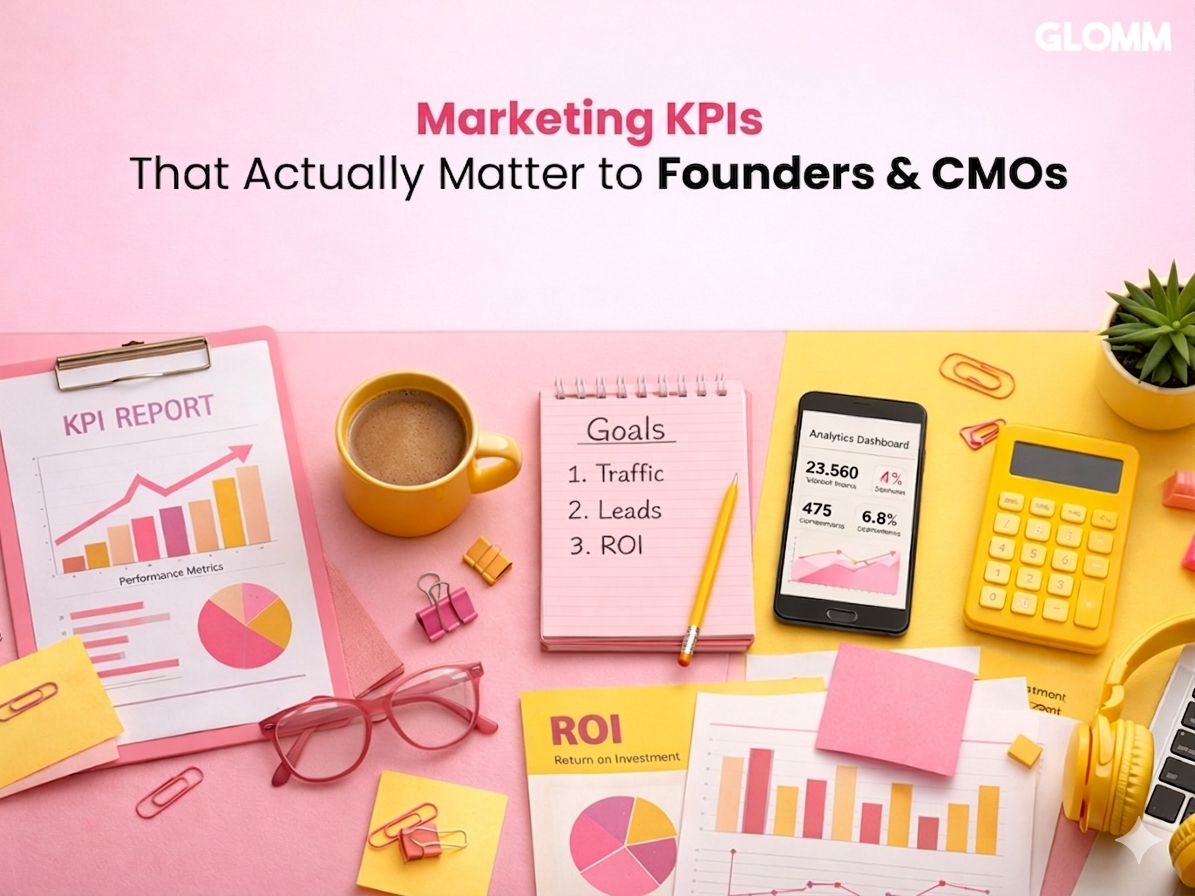
👉 To measure true success across both channels, tracking the right metrics is critical:
https://glomm.co/marketing-kpis-that-matter/
When Influencer Marketing Works Better
Influencer marketing is most effective when:
- You want to build trust and brand credibility
- Your product depends on social proof and recommendations
- You’re targeting Gen Z or millennial audiences
- You want to leverage user-generated content (UGC)
Consumers today are far more likely to trust a recommendation from a creator than a traditional ad.
This makes influencer marketing powerful for:
- Brand awareness
- Product discovery
- Community building
- Engagement-driven campaigns
It’s especially impactful in industries like beauty, fashion, wellness, lifestyle, and D2C brands.
👉 If you’re looking to scale creator-led campaigns, explore:
https://glomm.co/influencer-marketing-agency-in-dubai/
When Paid Ads Work Better
Paid ads perform best when:
- You need quick, scalable results
- You’re targeting high-intent users
- You want full control over messaging and audience segmentation
With paid ads, brands can:
- Test multiple creatives quickly (A/B testing)
- Optimize campaigns in real time
- Scale campaigns based on performance data
This makes them ideal for:
- Lead generation
- E-commerce conversions
- Performance-driven campaigns
- Retargeting and funnel optimization
👉 For data-driven growth strategies, check:
https://glomm.co/performance-marketing-and-ads/
The Limitations of Each
Influencer Marketing Challenges:
- Harder to scale quickly
- ROI can be inconsistent without the right strategy
- Depends heavily on creator selection and audience alignment
Paid Ads Challenges:
- Increasing CPC and CPM costs
- Ad fatigue and banner blindness
- Lower trust compared to organic or creator-led content
- Requires continuous optimization and budget
👉 This is where improving conversion efficiency becomes critical—not just driving traffic:
https://glomm.co/why-conversion-rate-optimization-matters-more-than-traffic/
What High-Performing Brands Do in 2026
The most successful brands don’t choose one—they combine both.
Here’s how:
- Use influencers to create authentic, relatable, high-performing content
- Amplify that content using paid ads
- Retarget users who engage with influencer campaigns
- Optimize using performance marketing data
This strategy blends trust + scale, delivering stronger overall ROI.
📈 In fact, brands using influencer-generated content in ads often see:
- Higher engagement rates
- Lower cost per acquisition (CPA)
- Better conversion performance
Key Takeaways
- Influencer marketing = Trust, engagement, authenticity, social proof
- Paid ads = Scale, targeting, measurable performance, speed
- Best results = Integrated marketing strategy combining both
Conclusion
So, what works better—influencer marketing or paid ads?
Individually, both are powerful. But together, they’re unstoppable.
In 2026, the winning strategy is clear: Build trust through creators, and scale it through paid media.
Because in a crowded digital world, attention gets you seen—but trust gets you chosen.
Want to maximize ROI with the perfect mix of influencer marketing and paid ads?
At Glomm, we combine creator-led storytelling with performance marketing to deliver real, measurable growth.
Both work best together. Influencer marketing builds trust, while paid ads drive scalable conversions.
Yes, in many cases. Influencer campaigns often deliver higher ROI due to strong engagement and credibility.
Absolutely. Paid ads are essential for scaling, retargeting, and driving immediate results.
Because consumers trust creators more than traditional advertising, especially on social media platforms.
By using influencer content for ads, retargeting engaged audiences, and optimizing campaigns with performance data.