

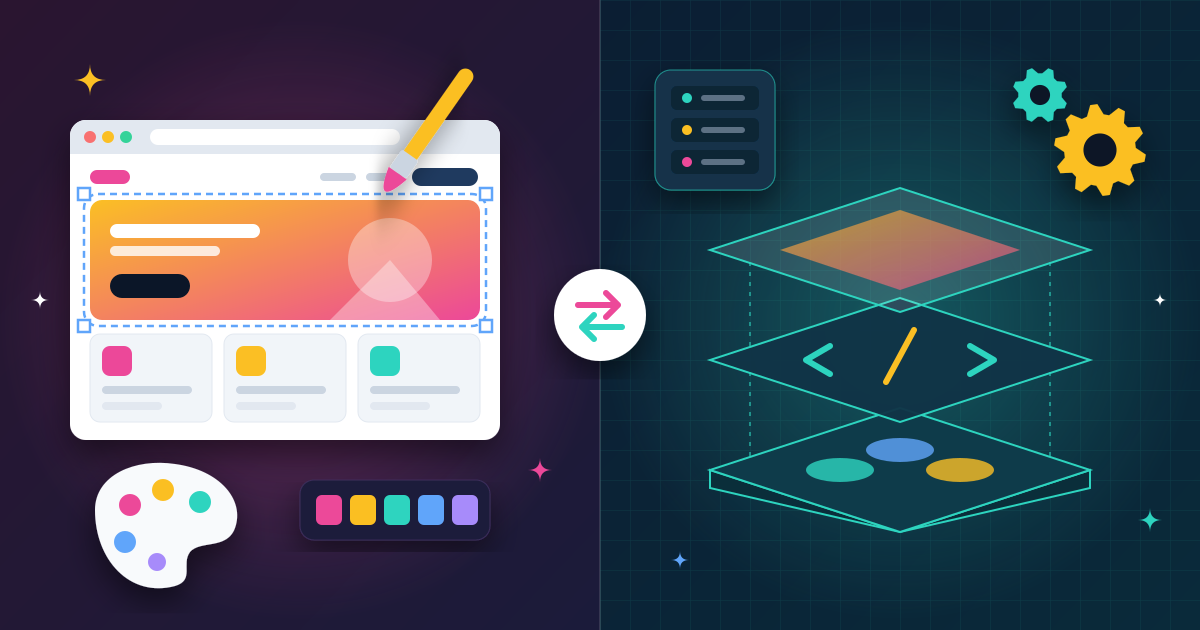
| Quick answerA redesign changes how your website looks and works for visitors (layout, navigation, content, calls to action) on the platform you already have. A rebuild replaces what sits underneath: the platform, code, database or architecture.Redesign when the foundation is sound and the problem is how the site looks, reads or converts. Rebuild when the platform blocks what you need, speed or security cannot be fixed in place, or the business has outgrown the site.Either way, protect your search traffic: map every old URL to a new one, use 301 redirects, and keep them for at least a year, as Google advises. |
“We need a new website” can mean four different projects with very different costs and risks. Agencies tend to recommend the one they sell. This guide gives you a way to decide on evidence, using a 12-question scorecard, Google’s own guidance on protecting rankings, and the speed data that shows when design alone will not fix the problem.
Table of Contents
ToggleWebsite Redesign vs Rebuild: How to Choose the Right Fix for Your Website
1. Refresh, redesign, replatform or rebuild: what is the difference?
Most guides compare two options. In practice there are four, and the right one is often in the middle.
| Option | What changes | What stays | Typical trigger |
|---|---|---|---|
| Refresh | Colours, imagery, copy, a few page templates | Platform, structure, URLs | Site looks dated but works |
| Redesign | Layout, navigation, user journeys, content structure, front-end code | Platform (CMS) and usually most URLs | Poor conversion, confusing navigation, brand change |
| Replatform | The CMS or commerce platform, e.g. WooCommerce to Shopify | Brand, content and ideally the URLs | Platform limits, maintenance cost, missing features |
| Rebuild | Platform, code, data model, integrations and usually the design | Brand and domain | Technical debt, security, new business model |
The useful question is not “how new will it look?” but “which layer is causing the problem?” A rebuilt site can look identical to the old one. A redesign can change every page a visitor sees without touching the database.
2. Redesign vs rebuild side by side
| Factor | Redesign | Rebuild |
|---|---|---|
| Main focus | Visual design, UX, messaging, conversion | Architecture, code, CMS, performance, integrations |
| Platform | Kept | Often replaced |
| URLs | Usually kept | Often change |
| SEO risk | Lower, if URLs and content stay stable | Higher; needs a full migration plan |
| Relative cost | Lower | Higher |
| Relative time | Shorter | Longer |
| Biggest danger | A cosmetic fix that leaves the real problem in place | Losing rankings through redirect and indexing mistakes |
3. The 12-question scorecard
Answer each question honestly. Score 1 if the answer points to the foundation (rebuild or replatform) and 0 if it points to the surface (redesign or refresh).
| # | Question | Score 1 if… |
|---|---|---|
| 1 | Can the platform do what the business needs in the next two years? | No, and workarounds are piling up |
| 2 | Is the site still slow after images, caching and scripts have been optimised? | Yes |
| 3 | Is the CMS, theme or core code still supported and patched? | No, or it has been compromised |
| 4 | Does updating one plugin or app break other parts of the site? | Yes, regularly |
| 5 | Can your team publish a new page or landing page without a developer? | No |
| 6 | Do payments, CRM, booking or inventory integrations work reliably? | No, or they cannot be added |
| 7 | Can the site handle Arabic and English properly (RTL, separate URLs, hreflang)? | No, and the platform cannot add it cleanly |
| 8 | Does the URL and page structure match what you sell today? | No, it reflects an old business model |
| 9 | Has your product range, market or business model changed significantly? | Yes |
| 10 | Is the main complaint about how the site looks or reads? | No (score 0 if yes) |
| 11 | Do visitors arrive but fail to convert at the same pages? | No (score 0 if yes; that is usually a UX problem) |
| 12 | Is ongoing maintenance costing more each year? | Yes |
| How to read your score0–3: Redesign or refresh. The foundation is fine; fix the experience.4–6: Replatform, or redesign now and rebuild later. Look at which questions scored 1: if they are about the platform (1, 3, 5, 6, 7), replatform; if about speed or structure, get a technical audit first.7–12: Rebuild. Plan it as a site migration, in phases if you can. |
This scorecard is Glomm’s editorial tool for structuring the decision, not a substitute for a technical audit.
Signs you need a redesign
- Visitors land but do not enquire or buy, and analytics shows them leaving at the same pages.
- The site looks dated next to competitors or no longer matches your brand.
- Key services or products are hard to find.
- Mobile pages work but feel cramped.
- Content is out of date, but your team can edit it easily.
Signs you need a rebuild or replatform
- The platform or theme is unsupported, or the site has been hacked more than once.
- Pages stay slow after optimisation because of the platform or code.
- Every small change needs a developer.
- You need features the platform cannot deliver: multi-language handling, custom checkout, customer portals, booking or ERP integration.
- The site structure no longer matches what the business sells.
4. When does a redesign alone fail?
A redesign fails when the problem sits underneath the design. The commonest case is speed. A new layout on a slow platform is still a slow site, and the money spent on design is partly wasted. Before choosing, run the site through PageSpeed Insights and check the Core Web Vitals report in Search Console, which uses real-user data. If the slowness comes from server response, a heavy theme or plugin stack, a redesign will not fix it.
5. What the speed data says
Speed is where design and technology meet, and it is often what tips the decision.
| Core Web Vital | Measures | “Good” threshold |
|---|---|---|
| Largest Contentful Paint (LCP) | Loading: when the main content appears | 2.5 seconds or less |
| Interaction to Next Paint (INP) | Responsiveness: delay after a tap or click | 200 milliseconds or less |
| Cumulative Layout Shift (CLS) | Visual stability: how much the page jumps | 0.1 or less |
Source: web.dev. Google assesses each metric at the 75th percentile of page loads, separately for mobile and desktop.
- Only 55.9% of websites passed all three Core Web Vitals in the May 2026 Chrome UX Report.
- Mobile lags desktop: the 2025 Web Almanac found 48% of mobile sites passing against 56% on desktop.
- Speed affects revenue. In Deloitte’s “Milliseconds Make Millions” study, a 0.1-second improvement in mobile site speed was associated with 8.4% more conversions for retail sites and 10.1% for travel sites, and an 8.3% improvement in bounce rate on lead-generation information pages.
- In the UAE, mobile is the main screen. Statcounter recorded about 59% of UAE web traffic on mobile in June 2026.
Practical reading: if your mobile Core Web Vitals fail and the cause is the platform, include speed in the scope from day one, which usually points to a replatform or rebuild. If they fail because of oversized images or a slider, a redesign can fix it.
6. How do you protect your Google rankings?
Most traffic losses after a new website are caused by avoidable mistakes, not by the change itself. Here is what Google’s documentation says and what it means for your project.
| What Google says | What it means for you |
|---|---|
| 301 and other permanent redirects do not cause a loss in PageRank. | Redirects are safe. Missing, wrong or temporary (302) redirects are the problem. |
| Change only one thing at a time: move domain, then change CMS, then change layout. | If you need a new platform and a new design, phase them, or at least keep URLs and content stable during the platform move. |
| A site move happens URL by URL; Googlebot must visit every old and new URL at least once. | Large sites take longer to settle. Expect temporary ranking fluctuation. |
| Combining a site move with a redesign of content and URL structure will probably cause some traffic loss while Google reassesses pages. | Keep high-value URLs and their content where possible. |
| Keep redirects in place for at least a year (John Mueller, Google). | Do not let a hosting change or a new developer remove them after three months. |
| The Change of Address tool is for moves between domains, not URL changes within one site. | For a same-domain rebuild, rely on redirects and an updated XML sitemap. |
A cautionary example from Ahrefs: one site deleted about 15% of its organic pages during a redesign and lost almost half its organic traffic, which did not recover even as it gained new links. Pages that look unimportant to a designer may be the ones bringing in search visitors.
Migration checklist
| Stage | What to do |
|---|---|
| Before | Crawl the current site and export every URL with its title, canonical, status code and inlinks. Record a baseline from Search Console and analytics: clicks, top pages, top queries, conversions. Mark which URLs must not change. |
| Build | Build on a password-protected staging site blocked from indexing. Map every old URL to its closest new equivalent, one to one. Avoid redirect chains. Carry over titles, headings, schema and internal links for pages that rank. |
| Launch | Remove staging noindex and robots.txt blocks. Switch on redirects. Submit the new XML sitemap. Spot-check key URLs with the URL Inspection tool. Launch in a quiet trading period, not before Ramadan or White Friday. |
| After | Check the Page Indexing report and 404s daily for two weeks, then weekly. Compare clicks and conversions with the baseline. Keep redirects for at least a year. |
For a fuller technical review see our, or bring in Glomm’s SEO team at the planning stage rather than after launch.
7. What should UAE businesses check before choosing?
- Arabic and English. Right-to-left layout, Arabic fonts, separate language URLs and reciprocal hreflang tags need to be designed in, not added later. If your platform handles Arabic poorly, that alone can justify a replatform.
- Mobile first. With most UAE traffic on phones, test on mid-range Android devices, not just the latest iPhone.
- Payments and delivery. Confirm your payment gateway, cash-on-delivery handling, delivery partners and VAT invoicing work on the new platform before you commit.
- Hosting and delivery. Check where the site is hosted and whether a CDN serves Gulf visitors from a nearby location.
- Data protection. Contact forms, cookies and CRM integrations should be reviewed against the UAE Personal Data Protection Law (Federal Decree-Law No. 45 of 2021) and any free-zone rules that apply to you.
- Timing. Avoid launching just before Ramadan, Eid, White Friday or the Dubai Shopping Festival.
8. How much does each option cost, and how long does it take?
A redesign generally costs less and finishes sooner than a rebuild, because the platform, hosting, database and most functionality stay. What actually moves the price:
| Cost driver | Why it matters |
|---|---|
| Number of page templates (not pages) | Ten product pages on one template cost far less than ten unique layouts |
| Custom functionality | Booking, portals, calculators, configurators |
| Integrations | Payments, CRM, ERP, inventory, delivery |
| Content and data migration | Products, blog posts, customer records, media |
| Languages | Arabic adds RTL design, translation and testing |
| SEO migration | Crawling, URL mapping, redirects, monitoring |
| Testing and QA | Devices, browsers, forms, checkout, tracking |
| What Glomm chargesGlomm’s website projects range from AED 3,000 to AED 50,000.A refresh or a redesign of a small brochure site on its existing platform sits near the lower end. A rebuild or replatform with custom functionality, integrations, Arabic and English, and a full SEO migration sits near the upper end. |
These are Glomm’s own prices, not a market survey; we found no reliable UAE-wide data. When comparing agencies, ask for a scope broken down by the drivers above, and be wary of any quote that does not mention redirects or SEO.
9. Can an AI website builder replace a redesign or rebuild?
AI builders and design tools can produce a new layout or a working prototype quickly, which is useful for exploring ideas and for small brochure sites. They do not decide which layer of your site is broken, and they do not carry over your rankings for you. URL mapping, redirects, data migration, integrations, Arabic handling and testing still need someone to plan and check them. Treat AI as a way to speed up design, not as a replacement for the decision in this guide.
10. Is there a middle route?
Yes. Phasing lowers risk and follows Google’s advice to change one thing at a time.
- Replatform first, keep URLs and content, redesign after. You get a better foundation with minimal SEO disruption.
- Redesign now, rebuild later. Sensible if the platform will last another year or two but the experience is costing leads.
- Rebuild one section. For example, move the shop to a new platform and leave the content site in place, with redirects.
11. How should the project run?
- Audit: analytics, Search Console, speed, structure. Find the real problem.
- Set measurable goals: enquiries, conversion rate, Core Web Vitals, not “a modern look”.
- Choose the route using the scorecard.
- Inventory content and URLs: keep, merge, retire, and record the decision for each.
- Design and build on staging, blocked from search.
- Prepare and test redirects.
- Launch in a quiet period with the team on hand.
- Monitor daily, then weekly, against the baseline.
12. Questions to ask an agency before you sign
- Which layer do you think is causing our problem, and what evidence supports it?
- Which URLs will change, and why?
- Who owns the redirect map, and how will you test it before launch?
- How will you handle Arabic and English?
- What Core Web Vitals targets will the new site meet, and how will you measure them?
- What happens in the 90 days after launch, and who watches rankings and errors?
- Do we own the code, theme, content and accounts at the end?
How Glomm approaches redesigns and rebuilds
Glomm’s website design and development team starts with an audit of speed, structure and search data, then recommends the smallest change that fixes the actual problem. For ecommerce brands that have outgrown their platform, our Shopify development work covers replatforming with SEO migration built in.
Bottom line
Choose by the layer that is broken, not by what sounds modern. If the foundation is sound, redesign the experience. If the foundation is the problem, replatform or rebuild it, in phases where you can, and plan the redirects, staging settings and monitoring as carefully as the design. For a second opinion on which route fits your site, see Glomm’s website design and development services, browse our case studies or contact us.
No. A redesign changes the design, layout and user experience on your existing platform. A rebuild replaces the platform, code or architecture underneath. Many projects combine both.
It can. Changing URLs, removing pages, or altering headings, internal links and page content can all move rankings. Keeping important URLs and content, using 301 redirects for anything that moves, and monitoring Search Console after launch keeps the risk low.
Crawl and benchmark the old site, keep high-performing URLs, map every changed URL to its closest new page with a 301 redirect, carry over titles and content for ranking pages, block the staging site from indexing, and keep redirects live for at least a year.
At Glomm, website projects cost AED 3,000 to AED 50,000. A refresh or a redesign of a small site on its existing platform sits near the lower end; a rebuild or replatform with custom functionality, integrations, bilingual content and SEO migration sits near the upper end.
A redesign is usually shorter than a rebuild because the platform stays. Time depends mostly on templates, integrations, content migration, languages and approval speed.
Google says a site move is processed URL by URL and rankings may fluctuate meanwhile. Important pages are usually picked up faster; large sites take longer. Keep monitoring for several months.
There is no fixed cycle. Review speed, security, conversion and brand fit at least once a year, and redesign when the evidence says the site is holding the business back.
AI tools can generate layouts and prototypes quickly, but they do not diagnose the problem or handle redirects, data migration, integrations and testing. They speed up design; they do not replace the planning.
Under IFRS, which UAE companies generally use, SIC-32 treats a company’s own website as an intangible asset under IAS 38. Planning costs are expensed. Some application, infrastructure and design development costs can be capitalised if they meet the IAS 38 criteria, while operating costs are expensed. Ask your accountant how this applies to your project.
Yes. Keeping the domain and the important URLs is the simplest way to protect search visibility.