
Performance marketing in 2026 is no longer about driving traffic—it’s about maximizing conversion efficiency at every stage of the funnel.
With rising ad costs and shrinking attention spans, brands that win are those that optimize the entire journey—from the first click to the final conversion. Because in today’s landscape, a click without conversion is just wasted budget.
Table of Contents
ToggleWhat is a Performance Marketing Funnel?
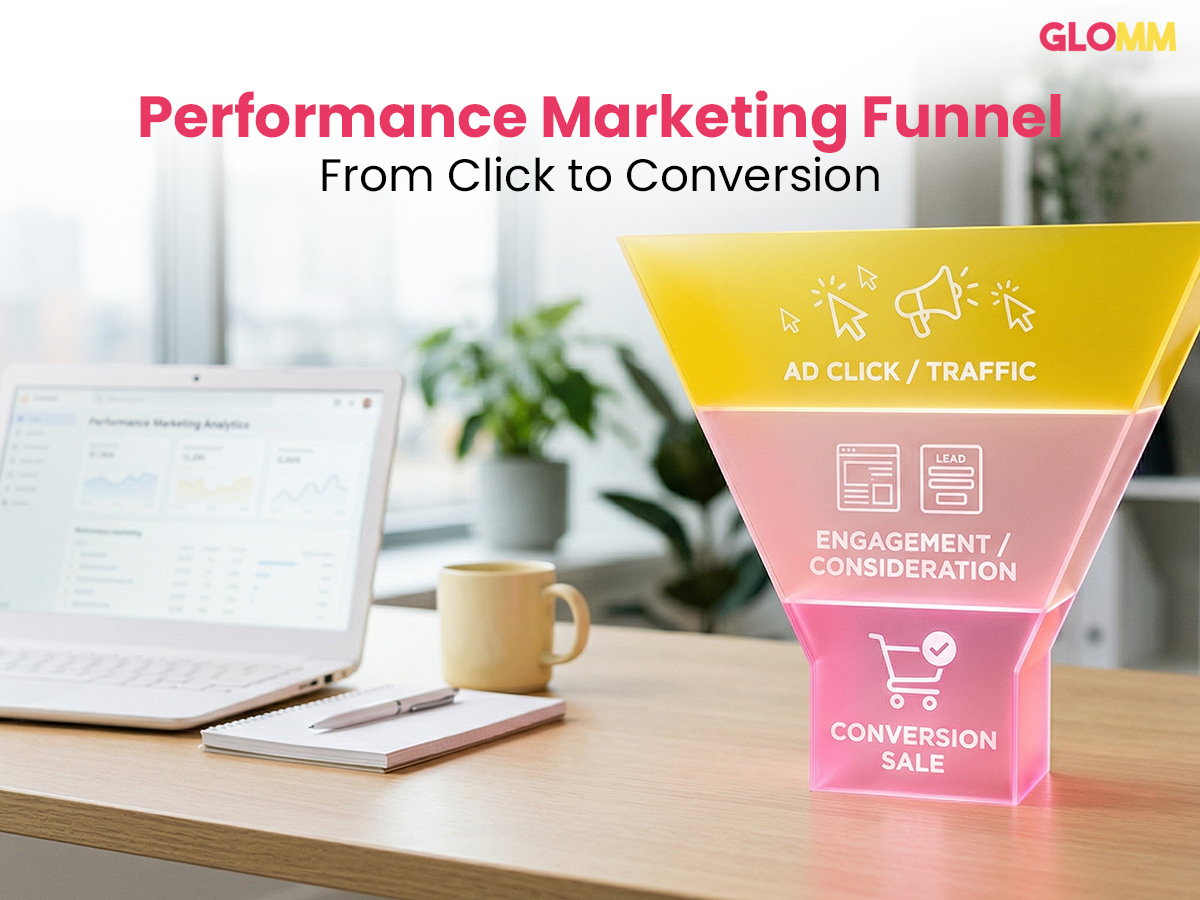
A performance marketing funnel maps the complete user journey:
Ad Click → Landing Page → Engagement → Conversion
Each stage plays a critical role in turning traffic into revenue. Even a small leak—whether it’s poor targeting or a slow landing page—can drastically reduce ROI.
👉 If you want to understand why optimizing conversions matters more than traffic, read: → Why Conversion Rate Optimization Matters More Than Traffic
Stage 1: Click – Attracting High-Intent Traffic
Everything begins with the click—but not all clicks are equal.
High-performing campaigns focus on:
- Targeting high-intent audience segments
- Using scroll-stopping creatives
- Writing benefit-driven ad copy
Platforms play different roles in the funnel:
- Google Ads captures users actively searching (high intent)
- Meta Ads creates demand through discovery and targeting
This difference matters. Research shows that Google captures demand while Meta builds it, making both essential for a full-funnel strategy.
👉 Learn how to balance both platforms effectively:→ Google Ads vs Meta Ads ROI
Key Metric: CTR (Click-Through Rate)
Stage 2: Landing Page Optimization (Where Interest Builds)
Once a user clicks, your landing page determines whether they stay—or leave.
A poor experience here kills conversions.
- Pages loading under 2 seconds can improve conversion rates by 34%
- Mobile-optimized pages reduce bounce rates significantly
Best Practices:
- Load time under 3 seconds
- Strong message match with ads
- Clear, action-driven CTAs
- Social proof (reviews, testimonials, data)
👉 If you’re driving traffic without optimizing this stage, you’re losing money.
Key Metric: Bounce Rate (Bounce rate measures users who leave without taking action)
Stage 3: Engagement – Turning Interest into Intent
At this stage, users are interested—but not ready to convert.
Your job is to:
- Educate
- Build trust
- Remove objections
Strategies that Work:
- Retargeting campaigns
- Email nurturing sequences
- Product education content
Retargeting is especially powerful. Campaigns targeting warm audiences can deliver significantly higher conversion rates than cold traffic.
Key Metric: Engagement Rate / Time on Site
Stage 4: Conversion – Turning Intent into Action
This is where your funnel either succeeds—or fails.
Even small improvements can have massive impact.
Conversion Optimization Tips:
- Simplify checkout or lead forms
- Use urgency (limited offers, countdowns)
- Reduce friction (fewer steps, mobile-first UX)
Studies show that search-driven traffic often converts better due to higher intent, while social traffic requires nurturing before conversion.
Key Metric: Conversion Rate (CVR)
Common Funnel Mistakes That Kill ROI
Most brands focus only on ads—and ignore the funnel.
That’s where they lose money.
Biggest Mistakes:
- Sending traffic to a generic homepage instead of a targeted landing page
- Ignoring mobile optimization (critical in India & global markets)
- No retargeting strategy
- Weak or no follow-up after the click
- Not tracking micro-conversions (scrolls, clicks, add-to-cart)
📉 The result?
High traffic. Low conversions. Poor ROI.
The Real Secret: Funnel Optimization
In 2026, performance marketing is not about more traffic—it’s about better conversion efficiency.
Top-performing brands:
- Continuously A/B test creatives and landing pages
- Optimize targeting and audience segmentation
- Analyze drop-offs at every funnel stage
Even a 1–2% increase in conversion rate can significantly boost revenue—without increasing ad spend.
Conclusion: From Clicks to Revenue
A successful performance marketing strategy isn’t just about getting clicks—it’s about building a A successful performance marketing strategy isn’t just about getting clicks—it’s about building a seamless journey from click to conversion.
The brands that win:
- Think beyond ads
- Optimize every touchpoint
- Use data to improve continuously
👉 If your campaigns are generating clicks but not conversions, it’s time to fix your funnel—not increase your budget.
For businesses looking to scale efficiently, investing in performance marketing services in Dubai can help you build high-converting funnels, reduce wasted ad spend, and maximize ROI.
A performance marketing funnel is the structured journey a user takes from clicking an ad to completing a desired action, such as a purchase or lead form. It typically includes stages like awareness, landing page interaction, engagement, and conversion, all optimized for measurable results.
The 4 main stages of a marketing funnel are:
Awareness – Attracting potential customers
Interest – Engaging users with relevant content
Consideration – Building trust and intent
Conversion – Driving the final action
These stages help guide users from discovery to purchase.
The 5 stages are:
Awareness
Interest
Consideration
Intent
Conversion
Some models also include Retention as a post-conversion stage to build long-term customer relationships.
A performance marketing funnel ensures that every stage—from click to conversion—is optimized for ROI. It helps businesses reduce wasted ad spend, improve targeting, and increase conversion rates through data-driven decisions.
Many agencies offer funnel optimization services, but if you’re looking for results-driven strategies, Glomm specializes in building high-converting performance marketing funnels, including ad strategy, landing page optimization, and conversion rate optimization.
To measure ROI effectively, track key metrics at each stage:
Click Stage: CTR, CPC
Landing Page Stage: Bounce rate, session duration
Engagement Stage: Engagement rate, retargeting performance
Conversion Stage: Conversion rate, CPA, revenue
Using analytics tools and attribution models helps identify drop-offs and optimize funnel performance.