
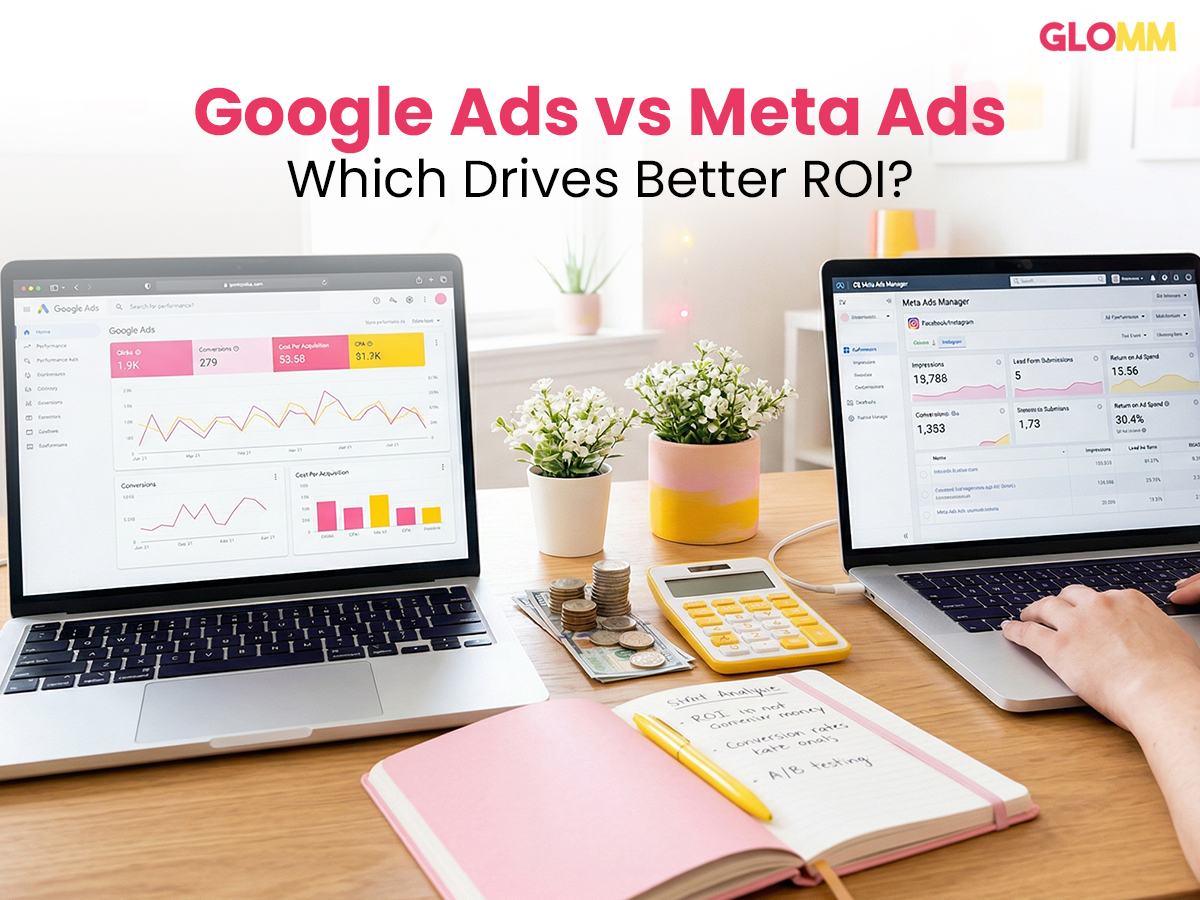
When it comes to paid advertising, one question every brand asks is: Google Ads vs Meta Ads, which one delivers better ROI?
The answer isn’t as simple as picking one. Both platforms dominate digital advertising, but they serve different purposes across the funnel. Understanding how each performs is key to maximizing returns.
Google Ads typically delivers higher ROI for high-intent conversions, while Meta Ads (Facebook & Instagram) excels at cost-efficient audience targeting and brand discovery. In 2026, the best results come from combining both—using Meta Ads to generate demand and Google Ads to capture ready-to-buy users across the funnel.
Table of Contents
ToggleGoogle Ads vs Meta Ads: Which Drives Better ROI in 2026?
When it comes to paid advertising ROI, one question dominates:
👉 Google Ads or Meta Ads—which platform performs better?
The truth is—they serve different roles in the customer journey. Understanding how each platform contributes to ROI is essential for building a profitable performance marketing strategy.
Key Takeaways
- Google Ads = High intent, high conversion rates
- Meta Ads = Scalable reach, lower cost per click
- Best ROI = Full-funnel strategy using both platforms
- eCommerce brands benefit from Meta for discovery + Google for conversions
- Integrated campaigns outperform single-channel strategies
Core Difference: Intent vs Discovery
The biggest difference between Google Ads and Meta Ads lies in user intent.
🔍 Google Ads (Search-Based Intent)
- Targets users actively searching for solutions
- Captures demand
- High purchase intent
📱 Meta Ads (Interest-Based Discovery)
- Targets users based on behavior, interests, demographics
- Creates demand
- Drives awareness and engagement
👉 Simple breakdown:
- Google Ads = Demand capture
- Meta Ads = Demand generation
ROI Comparison: Google Ads vs Meta Ads
| Factor | Google Ads | Meta Ads |
|---|---|---|
| User Intent | High | Low–Medium |
| CPC | Higher | Lower |
| Conversion Rate | 6–8% avg | 1–3% avg |
| Best Use Case | Sales & leads | Awareness & engagement |
| ROI Stage | Bottom funnel | Top & mid funnel |
Insights:
- Google Ads often delivers 2x higher conversion rates
- Meta Ads provides cheaper traffic and wider reach
- ROI depends on funnel stage, not just platform
When Google Ads Delivers Better ROI
Google Ads performs best when users already know what they want.
✅ Ideal For:
- High-intent searches
- Lead generation campaigns
- Service-based businesses
- Conversion-focused landing pages
💡 Example:
A user searching “best vitamin C serum” is far more likely to convert than someone scrolling social media.
🚀 Results:
- Higher conversion rates
- Immediate ROI
- Strong bottom-of-funnel performance
When Meta Ads Delivers Better ROI
Meta Ads (Facebook & Instagram) shines in discovery and engagement.
✅ Ideal For:
- Brand awareness campaigns
- Visual storytelling (fashion, beauty, lifestyle)
- Product discovery for new audiences
- Retargeting campaigns
🚀 Benefits:
- Lower CPC
- Advanced audience targeting
- High scalability
👉 This is why paid ads for eCommerce brands often rely heavily on Meta Ads for growth. It’s especially powerful for D2C brands, fashion, beauty, and lifestyle products.
The Real ROI Winner: Full-Funnel Strategy
In 2026, the highest ROI doesn’t come from choosing one platform—it comes from combining both strategically.
🧠 High-Performing Funnel Strategy:
- Meta Ads: Drive awareness & engagement
- Google Ads: Capture high-intent traffic & conversions
📊 Funnel Coverage:
Discovery → Consideration → Conversion
👉 Brands using this hybrid model see:
- Higher conversion rates
- Lower customer acquisition costs (CAC)
- Stronger long-term ROI
Which Platform Should You Choose?
Use Google Ads if:
- You want fast conversions
- You target high-intent keywords
- You need qualified leads
Use Meta Ads if:
- You’re building brand awareness
- You want to scale quickly
- Your product relies on visuals
Use Both if:
- You want maximum ROI
- You’re running performance marketing campaigns
- You want full-funnel dominance
Common Mistakes That Kill ROI
- Relying on only one platform
- Ignoring funnel stages
- Poor audience targeting
- Weak ad creatives
- No retargeting strategy
Why You Need a Performance Marketing Agency
Managing both platforms effectively requires expertise.
A professional performance marketing services provider can help you:
- Optimize ad spend across channels
- Improve conversion rates
- Build scalable campaigns
- Track ROI accurately
👉 If you’re looking to scale, working with a Facebook Ads and Google Ads management agency ensures:
- Data-driven strategies
- Continuous optimization
- Higher ROI with lower wasted spend
onclusion
So, which drives better ROI—Google Ads or Meta Ads?
👉 Individually, Google Ads converts better.
👉 But together, they deliver the highest ROI.
In 2026, success in paid advertising isn’t about choosing platforms— it’s about building a data-driven, full-funnel strategy where each channel amplifies the other.
Ready to Maximize Your ROI?
If you want to scale faster with performance marketing services, now is the time to act.
Partner with a Facebook Ads and Google Ads management agency that understands:
- Funnel strategy
- Data-driven optimization
- Revenue-focused campaigns
👉 Because in today’s competitive landscape, smart ad strategy = scalable growth.
Google Ads delivers better ROI for high-intent conversions, while Meta Ads is more effective for awareness and audience growth. The best results come from using both together.
Yes, Meta Ads typically have lower cost-per-click (CPC), making them more cost-efficient for reaching large audiences.
Yes, Google Ads usually have higher conversion rates because they target users actively searching for products or services.
A combination of Meta Ads for discovery and Google Ads for conversions works best for eCommerce brands.
A multi-channel performance marketing strategy combining Google Ads and Meta Ads delivers the best results.